
In today’s food processing industry, maintaining product quality and food safety is more important than ever. Customers expect contamination-free products, while manufacturers must comply with strict quality standards and food safety regulations.
Whether processing rice, flour, pulses, spices, seeds, or other free-flowing food products, even a small metal contaminant can create serious problems. Metal contamination not only affects product quality but can also damage processing equipment, result in product recalls, and harm brand reputation.
To prevent these risks, modern food processing industries rely on advanced inspection systems such as the Gravity Fall Metal Detector.
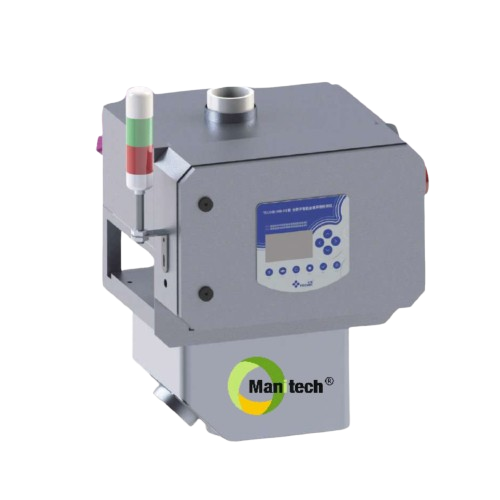
A Gravity Fall Metal Detector is designed specifically for inspecting free-flowing products moving through gravity-fed pipelines. It provides continuous contamination detection while maintaining production efficiency and product quality.
Manitech offers advanced Gravity Fall Metal Detector solutions designed to help manufacturers improve food safety, reduce risks, and maintain high-quality production standards.
What is a Gravity Fall Metal Detector?
A Gravity Fall Metal Detector is a specialized metal detection system used to inspect products that flow vertically through pipelines under gravity.
Unlike conveyor-based metal detectors, these systems are installed directly in production lines where products move freely through a vertical channel.
They are widely used for:
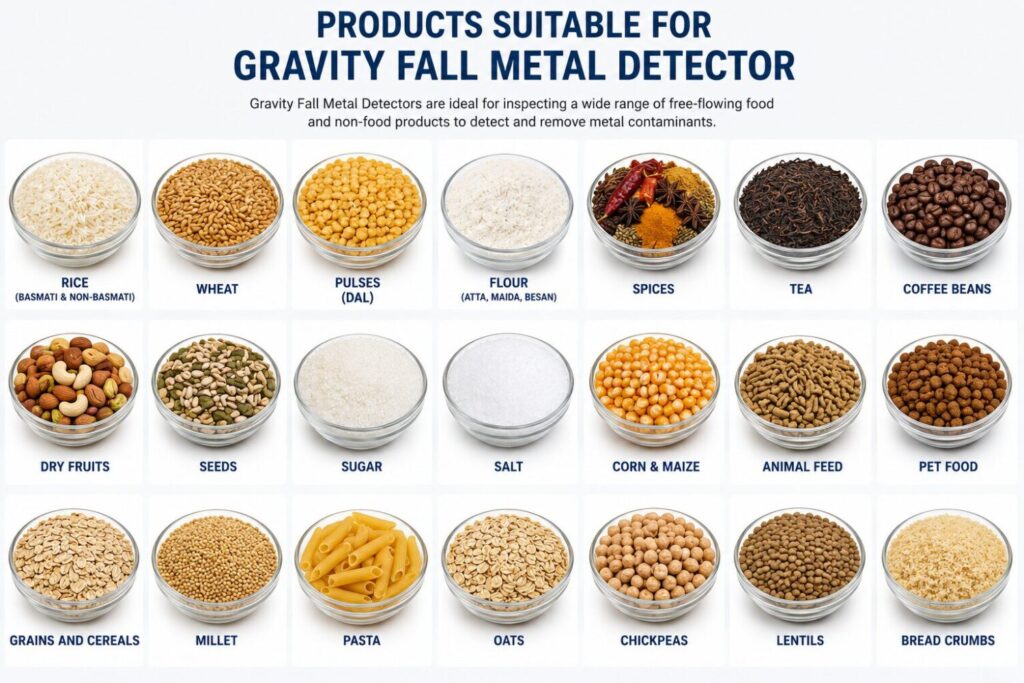
The detector continuously monitors the product flow and identifies metal contaminants before the product reaches the packaging stage.
This helps manufacturers prevent contamination from entering the final product.
Why Metal Detection is Important in Food Processing
Food safety has become a top priority across the world. Processing industries must ensure that products are free from contaminants before reaching customers.
Metal contamination can occur from several sources:
- Processing machinery wear
- Broken machine components
- Production equipment damage
- Raw material contamination
- Maintenance activities
- Handling equipment
Even a tiny metal fragment can create serious quality and safety concerns.
This is why advanced Gravity Fall Metal Detector systems have become essential in modern food processing facilities.
Types of Metal Contaminants Detected
Modern Gravity Fall Metal Detectors are capable of detecting multiple types of metal contaminants.
Ferrous Metals
Ferrous metals contain iron and are commonly generated from machinery wear and production equipment.
Examples include:
- Iron fragments
- Steel particles
- Rust contamination
Non-Ferrous Metals
These metals do not contain iron but can still contaminate food products.
Examples include:
- Aluminum
- Brass
- Copper
Stainless Steel
Stainless steel contamination is often the most difficult to detect.
Advanced metal detection technology helps identify stainless steel particles that may originate from production machinery and processing equipment.
How a Gravity Fall Metal Detector Works
The working principle of a Gravity Fall Metal Detector is both simple and highly effective.
Step 1: Product Feeding
The product enters the metal detector through a gravity-fed pipeline.
Materials move naturally downward through the inspection area without interrupting production flow.
Step 2: Continuous Metal Detection
As the product passes through the detection chamber, advanced electromagnetic sensors continuously monitor the material.
The system scans the entire product stream for metal contamination.
Step 3: Contaminant Identification
If a metal particle is detected, the system immediately identifies the contamination and activates the rejection mechanism.
Step 4: Automatic Product Rejection
The contaminated product is automatically removed from the production line.
This prevents contaminated material from reaching packaging or final processing stages.
The remaining uncontaminated product continues through the production process.
Benefits of Gravity Fall Metal Detectors
Modern processing industries choose Gravity Fall Metal Detectors because they provide multiple operational and quality advantages.
Improved Food Safety
Food safety is one of the primary reasons manufacturers invest in metal detection systems.
Detecting contamination before packaging helps ensure safer products for consumers.
Protection of Brand Reputation
A single contamination incident can damage customer trust and brand image.
Metal detection systems help reduce this risk significantly.
Continuous Production Monitoring
Gravity Fall Metal Detectors operate continuously without interrupting production.
This allows manufacturers to maintain efficiency while ensuring quality control.
Reduced Product Recalls
By detecting contaminants before products leave the facility, manufacturers can reduce the risk of costly recalls.
Compliance with Food Safety Standards
Many food safety standards require contamination control measures.
Metal detection systems help manufacturers meet industry requirements and audit expectations.
Why Rice Mills Need Gravity Fall Metal Detectors
Rice processing involves multiple stages including cleaning, grading, sorting, polishing, and packaging.
During these stages, contamination risks may occur due to machinery wear and handling equipment.
Modern rice mills increasingly rely on Gravity Fall Metal Detectors to:
- Improve food safety
- Protect processing equipment
- Reduce contamination risks
- Maintain export-quality standards
- Improve customer confidence
For rice exporters, maintaining contamination-free products is especially important.
A Gravity Fall Metal Detector helps ensure that rice meets international quality expectations.
Applications in Rice Processing Industries
Gravity Fall Metal Detectors are commonly installed in various stages of rice processing.
Before Packaging
To ensure contamination-free rice reaches the packaging stage.
After Color Sorting
To provide additional quality assurance after grain sorting.
During Final Inspection
To verify product safety before dispatch.
These inspection points help create a stronger quality control process.
Applications Beyond Rice Processing
Although widely used in rice mills, Gravity Fall Metal Detectors are also valuable in other industries.
Flour Mills
Detect contamination in flour and powdered products.
Pulse Processing Plants
Improve product quality and safety.
Spice Industries
Protect consumers from contamination risks.
Seed Processing Facilities
Maintain product purity and quality standards.
Dry Fruit Processing
Support contamination-free production.
Why Modern Food Industries Prefer Automated Metal Detection
Traditional inspection methods are no longer sufficient for modern production environments.
Manufacturers require systems that provide:
- High sensitivity
- Reliable detection
- Continuous monitoring
- Automatic rejection
- Reduced human error
A Gravity Fall Metal Detector delivers all of these advantages while supporting efficient production operations.
Automation also helps reduce manual inspection requirements and improve overall productivity.
How Gravity Fall Metal Detectors Support Export Markets
Export markets often demand higher quality standards than domestic markets.
International buyers expect:
- Safe products
- Consistent quality
- Regulatory compliance
- Reliable inspection systems
Even minor contamination can result in shipment rejection or customer complaints.
By implementing advanced metal detection systems, manufacturers can improve export readiness and customer confidence.
Why Choose Manitech Gravity Fall Metal Detectors?
Manitech focuses on delivering reliable inspection solutions designed for modern processing industries.
Our Gravity Fall Metal Detectors are developed to provide:
- High detection sensitivity
- Reliable contamination identification
- Automatic rejection systems
- Continuous production monitoring
- Easy integration with processing lines
These systems help manufacturers improve food safety while maintaining production efficiency.
Whether processing rice, flour, spices, pulses, or seeds, Manitech solutions support consistent quality control throughout the production process.
The Future of Food Safety and Inspection Technology
As food safety regulations become stricter and customer expectations continue to rise, inspection technology will play an increasingly important role in manufacturing.
Future-focused industries are investing in:
- Automated inspection systems
- Advanced contamination detection
- Intelligent quality control solutions
- Real-time production monitoring
Gravity Fall Metal Detectors are becoming a standard requirement for manufacturers committed to quality and food safety.
Businesses that invest in modern inspection technology today are better positioned for long-term growth and market competitiveness.
Conclusion
Food safety and product quality are critical priorities for modern food processing industries.
A Gravity Fall Metal Detector helps manufacturers detect metal contamination, improve quality control, and maintain customer confidence.
From rice mills and flour mills to spice and seed processing industries, these systems provide an effective solution for contamination detection and food safety compliance.
Manitech continues to support modern industries with advanced inspection solutions designed to improve product quality, operational efficiency, and long-term business success.
FAQ
What is a Gravity Fall Metal Detector?
A Gravity Fall Metal Detector is an inspection system used to detect metal contamination in free-flowing products such as rice, flour, spices, pulses, and seeds.
What products can be inspected using a Gravity Fall Metal Detector?
Rice, wheat, pulses, flour, spices, dry fruits, seeds, granules, and powdered products can be inspected.
Why is metal detection important in food processing?
Metal detection helps improve food safety, protect equipment, prevent recalls, and maintain product quality.
Can Gravity Fall Metal Detectors detect stainless steel?
Yes, advanced systems can detect ferrous, non-ferrous, and stainless steel contaminants.
Why do rice mills use Gravity Fall Metal Detectors?
Rice mills use them to improve food safety, reduce contamination risks, and maintain export-quality standards.